

Interview • June 2026
Echoes of 1914: Arne Westad on the New Global Order, Multipolarity, and Underappreciated Risks
Arne Westad speaks with The Argyle Group about his best-selling book, the transition into multipolarity, and the risks hiding in a volatile global order.

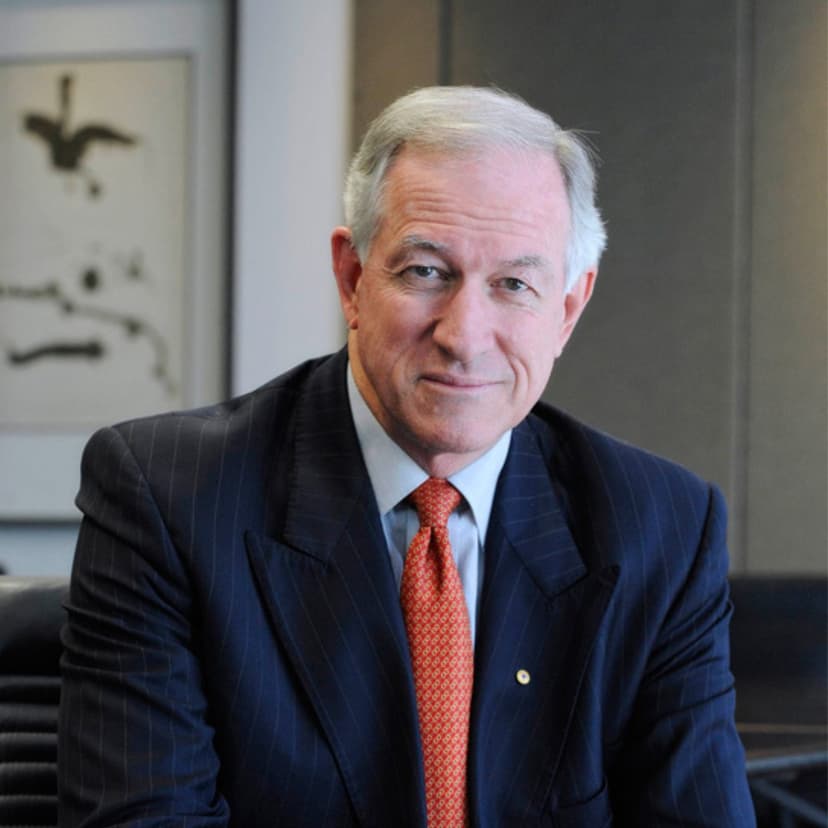
Arne Westad talks his best-selling book for The Argyle Group.
For decades, international relations were defined by relatively predictable structures. The Cold War gave us a rigid but legible bipolarity; the decades that followed ushered in an era of undisputed American hegemony.
Today that familiar terrain has vanished.
In a recent conversation, historian and global strategist Arne Westad shared his insights on his latest book tour, which has been making major waves across the globe, earning spots on McKinsey's reading list and seeing JP Morgan purchase copies for its entire workforce.
Westad warns that the world has rapidly accelerated into a complex multipolar system that no living person has experienced before. And to understand where we are going, Westad argues, we must look to the period just before 1914.
The Ultimate Historical Analogy: Pre-1914 vs. Today
While historians are naturally cautious about drawing overly tidy or deterministic parallels, Westad finds the structural similarities between our current moment and the early 20th century to be deeply striking.
There are always aspects of almost any international system that look slightly similar to today. But if you look at this as a whole... those comparisons are much less systemically relevant than what you find when you look at the early 20th century.
The core of Westad's warning lies in the shared systemic complacency of both eras. In the late 19th and early 20th centuries, global powers discovered too late that the international system had shifted in unforeseen directions. They struggled to play catch-up with a new reality and, as the First World War brutally demonstrated, they failed.
Today, particularly in the West, there remains a dangerous assumption that the world will eventually revert to a “normal” state of unipolarity or bipolarity. Westad insists it won't. The multipolar world is not a looming possibility; it is already here, and the transition has happened much faster than even he had anticipated when he began writing the book.
Ground-Level Perspectives: The Diversity of China
If given a sabbatical tomorrow, Westad wouldn't spend it in the corridors of power. He would spend it travelling through China, a nation he views as absolutely essential to the future of global affairs.
Importantly, Westad emphasises that you cannot understand a country by staying in the highlight-reel cities. “All politics are local,” he says. The stark regional differentiation in China, such as the generational gap between the wealthy Pearl River Delta and the deeply impoverished areas of northern “upstate” Guangdong, creates vastly different local conversations, disillusionments, and priorities.
Despite an increasingly difficult political climate, Westad notes that the Chinese people remain open and eager to engage in robust discussions, engagement, and commerce with foreigners. Understanding these local nuances is critical, as the Asia-Pacific has replaced Europe as the primary engine of world economic development and, consequently, the primary zone of risk.
Underrecognised Risks and the Black Swan Threat
When looking at contemporary threats, ranging from artificial intelligence to non-conventional warfare and volatile domestic politics, Westad is most preoccupied by Black Swan events: unpredictable incidents that erupt out of high baseline levels of structural tension, only to spiral rapidly out of control.
In 1914, the baseline tension was ignited by a singular terrorist act in Sarajevo. Today, East Asia sits on a similar powder keg. While Taiwan dominates global headlines, Westad points to a different, more volatile flashpoint: Korea.
Westad is convinced the North Korean regime will eventually collapse in one form or another, and the international community is profoundly unprepared for the fallout. North Korea is a heavily armed nuclear state sitting at a vital strategic intersection between China, Japan, Russia, and the United States. The sheer unmanageability of a North Korean collapse mirrors the 1914 crisis between Austria and Serbia, where a localised conflict became so rapidly complicated that great powers could not find a uniform direction to contain it.
The Illusion of Nuclear Deterrence
Crucially, Westad's research challenged his own assumptions about the stabilising power of nuclear weapons. During the Cold War, superpower bipolarity built a grim predictability into nuclear deterrence. Today, ongoing global proliferation and the development of “battlefield-use” tactical nuclear weapons have eroded that safety net. Westad no longer believes the mere existence of nuclear weapons guarantees that great powers will not go to war with one another.
In fact, the acceleration toward today's dangerous multipolar world has been driven by rapid shifts in great power behaviour. Westad points to an array of factors, including the shifting landscape of American politics, China's growing assertiveness, and widening fractures between Europe and the U.S.
However, the breakdown of the international order is also a consequence of unilateral actions that set dangerous precedents. Westad highlights recent geopolitical flashpoints, including the unprovoked, independent actions taken by major states, as symptomatic of this shift. When powerful nations act with complete disregard for the United Nations, international consultation, or traditional alliances, it signals a change in the global mode of operation. It normalises a dangerous rationale for other ambitious powers: if they can do it, so can we.
The Dilemma of Middle Powers
This eroding rules-based order places middle powers, such as Brazil, the UAE, or Australia, in a precarious and complex position.
While some strategists argue that multipolarity opens up lucrative economic opportunities by allowing middle powers to play larger states off one another, Westad urges caution. Australia represents the quintessential middle state dilemma: it maintains ironclad security ties with the United States while remaining deeply integrated economically with China. It has no ability to play one off against the other, but instead finds itself paralysed by this contradiction at the heart of its statecraft, mustering unconvincing rationales to other countries and to its own people.
For countries navigating this new epoch, Westad offers two central pieces of advice:
Acknowledge that time is up. A generation ago, middle powers operating under a unipolar umbrella could afford to believe that if a crisis emerged, they would have ample time to prepare, adapt, and pivot. Today, that buffer zone has vanished; crisis scenarios that were unthinkable a few years ago are now immediate possibilities.
Take security into your own hands. This does not mean throwing away existing international alliances or commitments. Rather, it requires middle powers to deliberately and diligently plan for their own defence. National security planning must be explicitly tailored to immediate, short-run threats rather than relying on the guaranteed intervention of a global hegemon.
Navigating an Unpredictable Map
Arne Westad's historical lens provides a sobering reality check for the modern world. The comforting architecture of the late 20th-century international system is gone, replaced by a fluid, highly volatile multipolar landscape. Whether looking at the regional economic disparities within China, the nuclear wildcard of the Korean peninsula, or the defence strategies of middle powers, the message remains uniform: complacency is a luxury we can no longer afford.